AI Image Generation: From Curiosity to Actually Useful
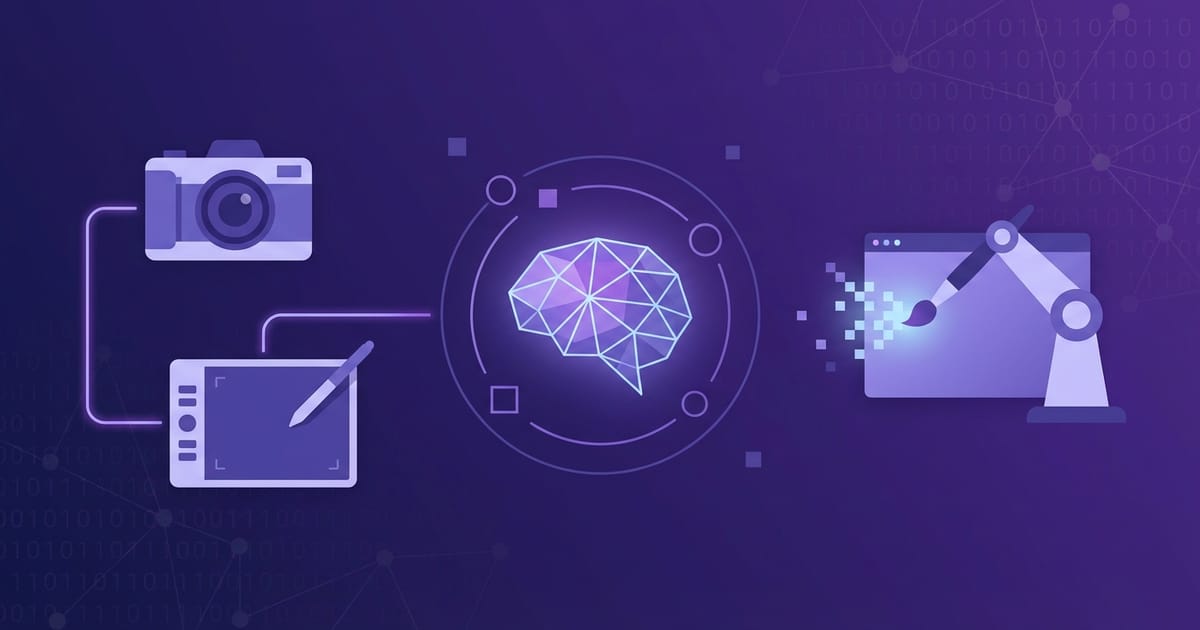
I'll admit it—when DALL-E first came out, I spent way too much time generating pictures of cats wearing business suits. Seemed like a cool party trick but not particularly useful for actual work. Fast forward two years, and I'm using AI image generation for client projects, blog headers, and concept visualization on a weekly basis.
The technology went from "neat demo" to "legitimate creative tool" faster than anyone expected. Here's what you need to know to use it effectively.
The Current Players (And What They're Good At)
Midjourney - The artistic powerhouse. Best for stylized, creative images that don't need to be photorealistic. I use it for concept art, mood boards, and anything where "artistic interpretation" is a feature, not a bug. Costs $10/month for basic plan.
The Discord interface is weird but you get used to it. The community aspect actually helps—seeing other people's prompts teaches you better techniques.
DALL-E 3 (via ChatGPT Plus) - Best for photorealistic images and text integration. If you need an image with readable text or want something that looks like a real photograph, DALL-E usually wins. Also excellent at understanding complex prompts.
The image editing features are genuinely useful. You can ask it to modify specific parts of an image without regenerating the whole thing.
Stable Diffusion (ComfyUI/Automatic1111) - Open source and infinitely customizable. Steep learning curve, but if you're willing to tinker with models, LoRAs, and settings, you can achieve results that beat the commercial services.
I run it locally on my gaming PC. Takes some setup, but once configured, you get unlimited generations without subscription costs.
Adobe Firefly - Built into Photoshop and other Creative Cloud apps. Not the best standalone generator, but the integration is fantastic if you're already in the Adobe ecosystem. Commercially safe training data is a big selling point for client work.
Prompting: The Skill Nobody Teaches You
Writing effective prompts is like learning a new language. Bad prompts get generic results. Good prompts get exactly what you need.
Start with style, then subject, then details. Instead of "dog," try "photorealistic portrait of a golden retriever, shallow depth of field, professional photography lighting, shot on Canon 5D Mark IV."
Use artistic references. "In the style of Annie Leibovitz" or "like a Pixar character" gives the AI clear stylistic direction. Much more effective than describing the style you want.
Specify what you don't want. Negative prompts are crucial. "Beautiful landscape, --no people, no buildings, no text, no watermarks" often works better than trying to describe the perfect scene.
Be specific about composition. "Medium shot," "bird's eye view," "over-the-shoulder angle" help control framing. AI defaults to generic compositions without guidance.
Practical Use Cases (That Actually Make Money)
Blog and social media headers - Stock photos are expensive and often generic. AI-generated headers can match your exact content and brand aesthetic. I generate custom images for every blog post now.
Concept visualization for clients - Need to show a client what their app might look like? Generate mockup screenshots. Planning a website redesign? Create visual mood boards in minutes instead of hours.
Product mockups - Generate lifestyle photos of products in different settings. Especially useful for e-commerce when you can't afford professional photography for every variant.
Illustrations for technical content - Diagrams, flowcharts, and technical illustrations. Way faster than drawing them yourself or hiring a designer for simple visuals.
Legal and Ethical Considerations
This gets complicated fast. Most AI models are trained on copyrighted images without explicit permission, which creates gray areas around commercial use.
For commercial work, I stick to Adobe Firefly or services that explicitly guarantee commercial usage rights. The legal landscape is evolving, and I'd rather be conservative.
For personal projects, I'm less concerned, but I never use AI to directly copy specific artists' styles for profit. "Photorealistic" or "digital art" is fine; "in the exact style of [living artist]" feels ethically questionable.
Always disclose when appropriate. If a client asks about image creation process, I'm transparent about AI use. Most clients care more about results than methods.
Workflow Integration That Actually Works
Start rough, refine later. Generate multiple options quickly, then pick the best one for refinement. Don't try to nail the perfect image on the first attempt.
Use AI for iteration. Generate a base image, then use img2img with modifications to refine specific aspects. Much faster than starting from scratch each time.
Combine with traditional tools. AI generates the base, then I edit in Photoshop for final polish. AI handles the creative heavy lifting; traditional tools handle precision work.
Build a prompt library. Keep notes on prompts that work well for different image types. Good prompts are reusable across projects.
Common Mistakes I See (And Made)
Expecting perfection immediately. AI image generation requires iteration. Plan for 10-20 attempts to get something you love, not just something acceptable.
Ignoring licensing. Just because you can generate an image doesn't mean you own it or can use it commercially. Read the terms of service.
Over-prompting. Too many descriptors can confuse the AI. Start simple, add complexity gradually.
Not learning the tools. Each platform has quirks and strengths. Spend time learning one tool deeply instead of jumping between them.
Is It Worth Learning?
For content creators, absolutely. The time savings alone justify learning basic prompting techniques. I've gone from spending hours finding the right stock photo to generating exactly what I need in 15 minutes.
For businesses, it depends on your visual needs. If you regularly need custom imagery and currently pay for stock photos or designer time, AI generation can offer significant cost savings.
The technology is still evolving rapidly. What's impossible today might be trivial in six months. But the fundamentals—understanding how to communicate with AI systems—are skills that'll transfer to whatever comes next.
Start with free trials of the major platforms. Generate some images for your current projects. See if it clicks. If you find yourself reaching for AI generation instead of stock photos, then it's probably worth the monthly subscription cost.